

2026 - Volume #50, Issue #4, Page #06
[ Sample Stories From This Issue | List of All Stories In This Issue | Print this story
| Read this issue]
Farm Finds Its Niche With Exotic Animals
 |
 |

“I’ve marched to the beat of a different drummer since I was 16 years old,” he says. “I was always interested in livestock, but my interests leaned more exotic.”
Herren came from a traditional farming background but didn’t like the commodification that came with the industry.
“I wanted to set my own prices on my animals and products, and I didn’t want to rely on government subsidies.”
He first raised ring-necked pheasants.
“They’re easy to raise and cheap to keep,” he says. “And I’ve always liked birds. A lot of people consider them a gateway animal.”
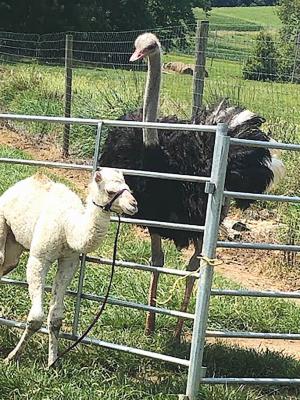
After graduating from high school in 1978, he naturally moved on to larger birds, such as emus and ostriches. He met a grandfather-like figure in Kansas, where he went to school, who had buffalo, elk and camels. In 1985, Herren added a buffalo herd to his operation.
“We had 63 head of cows at our peak. They’re more hands-off than cows, but require good fences and strong and tall corrals.”
Elk joined the operation in 1990, and he maintained both populations for decades.
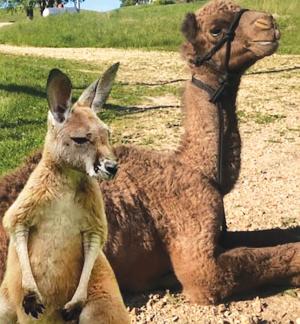
“I’ve had about a hundred crossbred beef cows my whole adult life,” Herren says. “I’d sell feeders, but exotics proved so much more profitable because camels require less feed and equipment. Ten years ago, 10 camels, for context, had as much value as a hundred cows.”
This makes exotic animals a uniquely high-risk, high-reward venture.
“One female bred camel is worth $20,000. You don’t need a lot to make a profit. But if you lose one, that’s a blow.”
Kamaroo Farms camels appear in nativity scenes but otherwise leave the property only for sale. Camel dairies are frequent buyers due to the growing popularity of camel milk among lactose-intolerant individuals.
“There’s only a few USDA-certified dairies in the United States,” Herren says. “The market seems poised to grow.”
Being USDA-accredited, the farm sells livestock to a variety of large and small zoos, individuals and drive-thru parks. An Airbnb is a secondary operation, and Kamaroo Farms offers tours to guests by appointment only.
“We have all these exotic animals, but kids love the chickens and tend to be the most popular,” Herren says. “Kids love collecting eggs. And bottle-feeding kangaroos or baby camels, when that’s available.”
He finds it extremely rewarding to teach adults and children about farming.
“Most have no clue what’s involved or where their food comes from. Sometimes people ask why we can’t let the animals go free. We have to explain that they aren’t wild; they’ve been in captivity for generations.”
According to Herren, exotic animal health requires careful attention, in part because of limited access to exotic animal veterinarians. A good, willing vet is a great help. Parasite issues are all too common, as most animals live in climates that differ from those where they evolved.
“We test our camels for parasites five times a year,” Herren says. “And kangaroo care is almost impossible to find in the States. I purchased a medical textbook from Australia for $300 years back that’s more than paid for itself.”
He also suggests seeking help from other owners of exotic animals.
“Find farmers who have been into exotics longer than you have and pick their brains. An experienced owner can help you know not to keep camels and goats together. I see it all the time, and it makes me cringe. Goats and sheep carry diseases and parasites that are harmful to camels.”
Some of Kamaroo’s animals have come as rescues.
“Camel rides are popular nationally, but the animals occasionally decide they’re done,” Herren says. “They’ll just sit down. We’ve gotten a few rejects that way.”
Sustainable farming lectures are occasionally offered, and the farm hosts outside speakers. Past events included Raising Quail for Fun and Profit and Raising Heirloom Corn for Profit. Kamaroo’s heirloom corn is grown using compost from its own animals and then milled into grits and cornmeal for sale. The farm hopes to add a water-powered gristmill soon.
“We’re a farm with the same trials and troubles and glories and goals that any other farm has,” Herren says. “It’s all hard work. We’re at the mercy of the weather; we still buck hay bales. Farming in any capacity is a calling in the truest sense of the word.”
Contact: FARM SHOW Followup, Mike Herren, Kamaroo Farms, 2924 Bess Hollow Rd., Kampsville, Ill. 62053 (ph 310-486-8672; www.facebook.com/kamaroofarms).

Click here to read entire issue
To read the rest of this story, download this issue below or click here to register with your account number.


