

2026 - Volume #50, Issue #4, Page #07
[ Sample Stories From This Issue | List of All Stories In This Issue | Print this story
| Read this issue]
They Restore Heirloom Stoves
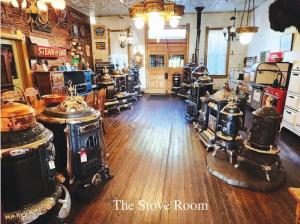 |

“Steve Hund started a minor stove restoration business for friends and family in the early 1970s,” says company representative David Berringer. “The business grew from there.”
Potential customers are asked to email photos of the stove, both inside and out, along with a description of what they want done. Mill Creek Antiques then reviews the photos to provide broad quotes.
The stoves are almost always delivered either personally by customers or shipped through one of the company’s two private shippers.
“Regular shipping companies don’t know how to deal with antiques,” Berringer says.
Once the stove arrives at the shop, each piece is inspected individually before the company commits to specific numbers for the restoration work.
“When customers leave us with a stove, they know exactly how much it’s going to cost.”
Pricing varies, but a standard, everyday stove typically costs between $2,000 and $2,800. A cookstove might cost closer to $4,000, often because it’s used less frequently, which can lead to stuck or broken parts. These costs are mostly due to labor, not parts, and the pricing for restored stoves is between 2/3 and 3/4 of the cost of a new stove from the Mill Creek showroom floor.
“Most people are fine with that,” Berringer says. “They’re invested in keeping a family heirloom in working order.”
The restoration process includes brushing off rust and welding broken pieces back together. Each piece is repaired individually before reassembly.
Mill Creek Antiques doesn’t use paint; it uses stove paste, and all nickel is buffed and polished to achieve an antique finish.
“The pricing of nickel has increased 300%,” says Berringer. “So, restoring the original metal is the more attractive option for most.”
If customers prefer new nickel, the pieces are sent to Wisconsin for restoration.
Turnaround time can vary, but for most stoves it’s about three months. Complicated wood-burning cookstoves can take an average of four months. Still, customers find the wait well worth it.
“We’re proud that 95% of the stoves we fix are put to use,” Berringer says. “It’s a real joy, creating stoves that exceed our customers’ expectations.”
Contact: FARM SHOW Followup, Mill Creek Antiques, 107 Newbury Ave., Paxico, Kan. 66526 (ph 785-636-5520; stoveking@millcreekantiques.com; www.millcreekantiques.com).

Click here to read entire issue
To read the rest of this story, download this issue below or click here to register with your account number.


